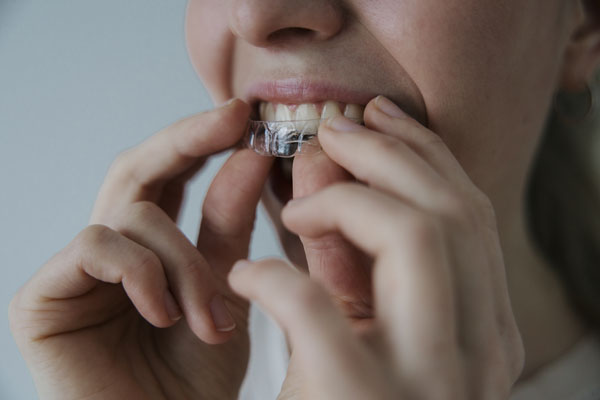
A convenient alternative to traditional braces, Invisalign® uses a series of clear removable aligners that gradually shift teeth. The aligners are custom-made for each patient to fit their individual dental treatment plan.
Invisalign® basics
Invisalign® is intended for adults and teenagers with fully developed adult teeth. The aligners, also known as trays, are made of flexible BPA-free plastic and worn day and night. Treatment time usually ranges from 6-18 months. Like traditional braces, the cost of treatment varies widely and depends on individual dental needs.
The process
The trays can correct crowded teeth and gapped teeth. The aligners also can be utilized to improve minor overbites, underbites or even mild crossbites. Before beginning treatment, the dentist can determine if you are a good candidate for Invisalign® by taking X-rays and impressions of the teeth.
Once a patient decides to use Invisalign®, the process is relatively simple. The dentist will take photos of your teeth and face. The photos, dental records, impressions and X-rays are then sent to a lab where technicians use software to create the aligners. These trays are sent back to the dentist who provides them to the patient. The aligners are designed to be worn for a two-week period. It is important to visit the dentist every four to six weeks to have progress evaluated and the treatment adjusted if needed.
The benefits
Unlike traditional braces, Invisalign® only requires patients to make a few minor changes to their daily routine. Benefits of choosing this treatment over traditional braces include the following:
- Clear and discreet aligners
- Gentle on teeth and gums
- Easy to remove and clean
- No limitation on chewy or hard foods
- No pain or discomfort from wires or brackets
- No issues with food getting caught
- Freedom to participate in sports
- Does not affect playing musical instruments, unlike braces
How Invisalign® works
The aligners apply pressure to the teeth so they will gradually move to the desired locations. Each tray is custom-created to the patient's mouth so the teeth will move approximately 0.1mm to 0.25mm over a two-week period. Patients need to wear their aligners for 20-22 hours each day to ensure treatment will be effective. They should only be removed during brushing, eating and drinking.
In addition to straighter teeth, patients who suffer from sore facial and jaw muscles may notice they have less pain as their bite improves. Invisalign® can also have a positive impact on facial shape and make features more symmetrical.
After the Invisalign® treatment produces the desired results, the dentist will likely recommend a removable or permanent retainer. A removable retainer should be worn full time for six months to a year before switching to night-time use only.
Conclusion
Once all the adult teeth have fully developed, an individual of any age can see if they are a good candidate for Invisalign®. With this discreet system, straighter, more confident smile is within reach.
Request an appointment here: https://bestcaredentalga.com or call Best Care Dental Inc. at (404) 419-1096 for an appointment in our Atlanta office.
Check out what others are saying about our dental services on Yelp: Invisalign in Atlanta, GA.
Related Posts
Dental cleaning is an essential aspect of your health. However, not everyone will have the same experience in a dental office. Some people may feel nervous or anxious about going to their dentist appointments, making them less compliant with aftercare instructions for dental cleaning. This article provides tips on how you can keep your teeth…
During a dental visit, it would be a good idea to get an oral cancer screening to see if you are at risk of developing oral cancer. According to the National Institutes of Health (NIH), about 49,700 people in the United States are diagnosed with oral cancer every year. Getting screened for this disease will…
Preventive dentistry is crucial for your oral wellness and overall health. If you neglect going to the dentist’s office, you could end up developing some serious conditions. Keeping on top of regular dental visits is vital from the time a person first has teeth, all throughout their life. If you are having a difficult time…
Often referred to as teeth grinding, bruxism is a condition where a person clenches or grinds the teeth together. This behavior may occur when awake or asleep and is most common in children. Many people are unaware they have this issue, so understanding the causes and what symptoms to look for can help patients start…